


Table of contents
- What HHX and HHZ have in common
- HHX – Close to familiar structures
- HHZ – Rarer on the market, specific in production
- Differences in chemical makeup and production
- Differences in market communication
- Typical product categories compared
- Transparency and lab reports
- Legal classification: Dynamic and complex
- Decision help: When should you choose which option?
- Two cannabinoids, lots of open questions
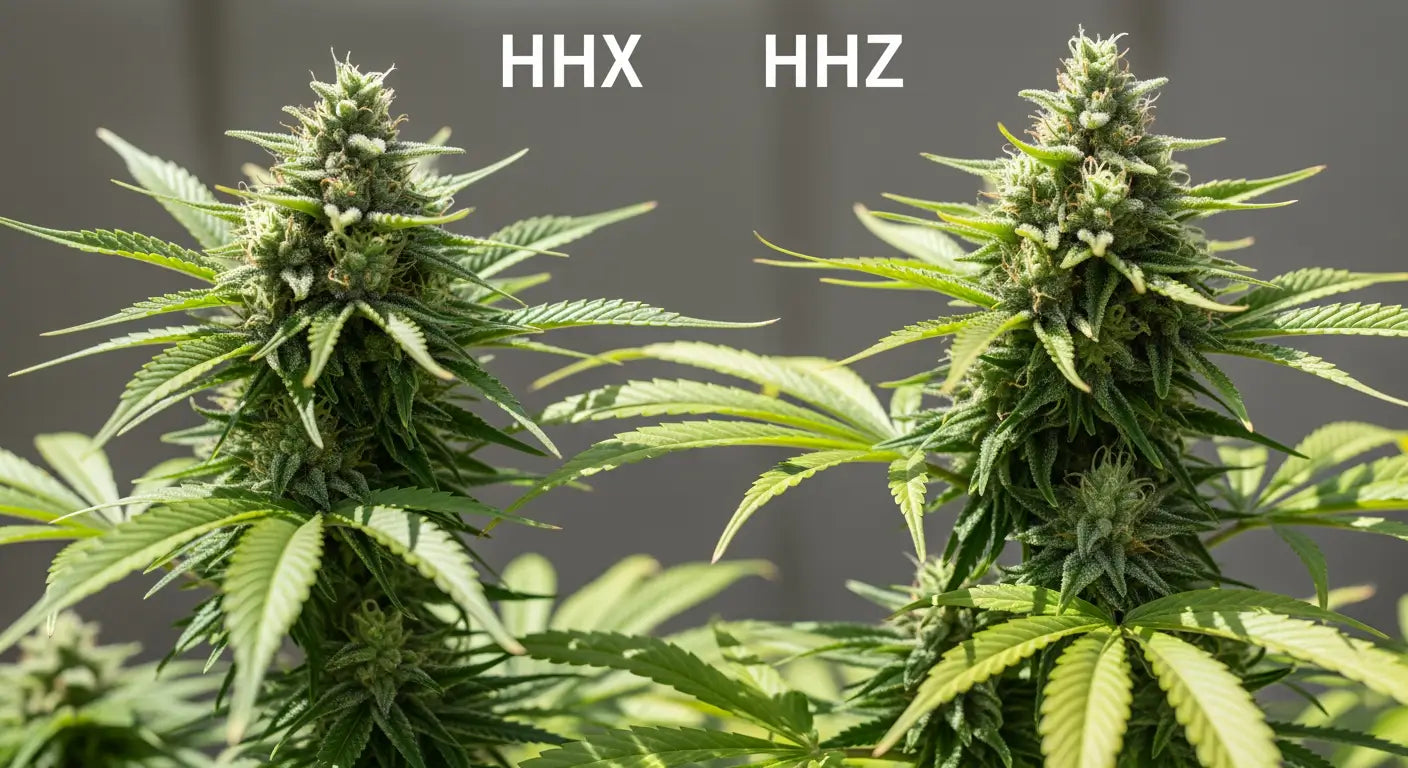
The market for cannabinoid products is evolving fast. Alongside established compounds like CBD, more and more substances are popping up that aren't as well known and often raise questions because their names sound so similar. Two of these are HHX and HHZ.
Both are used in different product forms like Flowers, vapes, gummies, or other products. But they differ in how they're made, their chemical classification, and how transparent the market is about them.
This article gives you a side-by-side comparison of the facts. What's the difference when just an X or a Z changes in the name? At first glance, it might just look like a jumble of letters, but if you look closer, you'll see totally different approaches in lab development.
We're here to clear things up and show you what's really behind these compounds and what you should look out for when buying.
What HHX and HHZ have in common
Let's start with what the two have in common before we check out the differences. HHX and HHZ both belong to a group of cannabinoids that aren't considered classic phytocannabinoids. You won't really find them in nature in any significant amounts—they're technically modified in the lab and mainly sold on the European market.
Both substances share:
- Limited scientific data on long-term use
- No uniform industry or definition standards
- High importance of manufacturer certificates and independent lab tests
HHX – Close to familiar structures
HHX is usually seen as a structurally related compound in the world of hydrogenated cannabinoids. The chemical name points to a close relationship with well-known base compounds like CBD or THC derivatives, but there's no universally accepted scientific classification yet. Since there's no standard for HHX, its quality really depends on the specific production process and the quality control behind it.
In practice, HHX is used in:
- common product forms like Flowers, vapes, hash, or concentrates
- product lines that focus on modified cannabinoids
- formulas where different cannabinoid derivatives are combined
HHZ – Rarer on the market, specific in production
HHZ is often labeled as a uniquely modified cannabinoid. It's usually not just a simple variant of known compounds, but described as its own chemical entity with a specific profile. There's still no official definition for HHZ either.
What’s typical for HHZ:
- it's not very common on the mass market
- it's used in very specific product lines
- it's closely tied to specialized manufacturers
 IntensiverProdukte, die im Vergleich zu anderen Varianten innerhalb unseres Sortiments als intensiver eingeordnet werden.
 IntensiverProdukte, die im Vergleich zu anderen Varianten innerhalb unseres Sortiments als intensiver eingeordnet werden.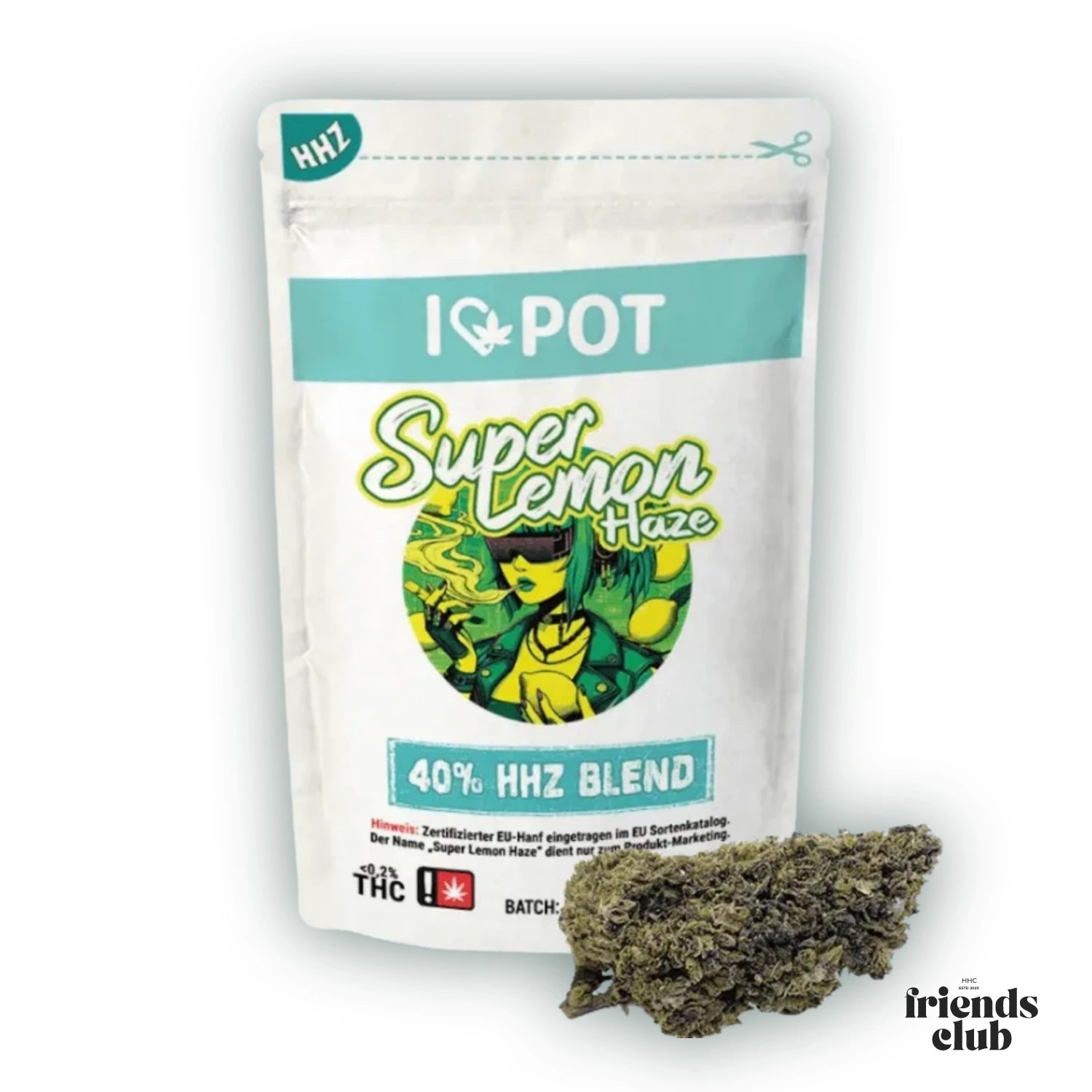

Differences in chemical makeup and production
A key difference between HHX and HHZ is in their molecular structure and synthesis process. Neither cannabinoid is made by simple extraction. They're created through semi-synthetic processes.
HHX is usually made by targeted modification of plant molecules. The base is often natural cannabinoids like CBD, which are stabilized through hydrogenation or structural changes. The goal is a new molecular structure that stands out from regular active ingredients in lab analysis.
HHZ, on the other hand, is often defined by more complex synthesis steps that go beyond just hydrogenation. Depending on the process, manufacturers use different reaction paths, which can lead to different isomers. These details show up especially in high-resolution lab analysis.
Since there are no uniform standards, products with HHX or HHZ can vary a lot depending on the supplier. Purity levels and the profile of byproducts are key points for quality control here.
Differences in market communication
A big difference between HHX and HHZ isn't just in their chemical makeup and how they're made, but also in how the industry positions them. This positioning affects which product categories they show up in, how they're marketed, and which target groups they're aimed at.
The differences mentioned so far are also reflected in how they're positioned on the market: While HHX is often presented as part of a broader cannabinoid development, HHZ is positioned more as a niche compound. In the industry, HHZ is seen less as a mass-market component and more as a cannabinoid with targeted use and limited availability.
In short, HHX and HHZ differ not just in how they're made, but also in their functional role in the cannabinoid market. HHX stands for broader use and bigger market presence, while HHZ is more about specialization and differentiation within the industry.
Typical product categories compared
The availability of both substances varies a lot depending on the type of product.
| Category | HHX | HHZ |
|---|---|---|
| Product forms | Broad spectrum (Flowers, vapes, hash) | Mainly selective Flowers or vapes |
| Market presence | Established in specialty shops | Mostly in specialized selections |
| Manufacturing variety | Wide range of processes | Highly manufacturer-dependent |
| Product range | Extensive | Selective |
Transparency and lab reports
A critical factor for both compounds is the validity of the product information.
Since there are no official reference standards for HHX and HHZ, the following proofs are essential for safety:
- Detailed lab analyses (COAs) to determine purity
- Transparency about the base raw materials used
- Clear labeling on the packaging
Legal classification: Dynamic and complex
Dynamic legal situation: The legal classification of new cannabinoids isn't fixed and can change quickly. For HHX and HHZ, these substances are often not explicitly listed in current banned substance lists, making a blanket assessment difficult.
Manufacturing process as a key factor: What's often decisive for legal classification is whether a cannabinoid is synthetically produced or technically modified from plant-based starting materials. Since lawmakers and authorities regularly respond to new substances, a permanently secure legal classification isn't possible at the moment.
- They're often not explicitly named in current banned substance lists
- The assessment depends heavily on the manufacturing process (synthesis vs. modification)
- Legal classifications can change at short notice
Decision help: When should you choose which option?
Right now, choosing between HHX and HHZ mainly depends on what you want from the product selection and transparency.
You're more likely to go for HHX if:
-
You value a wide selection: Since HHX is more established in the market, you'll find a huge range here, from classic Flowers to vapes and even highly concentrated hash.
-
You're looking for proven structures: HHX products often come from larger production lines where the processes (and therefore the analyses) are already more routine.
-
You want a more affordable option that's available in our HHC Friends shop.
You're more likely to go for HHZ if:
-
You're specifically looking for niche products: HHZ is rarer and is often offered by specialized manufacturers in smaller, more exclusive batches.
-
You're interested in new molecular structures: If you're into the technical evolution of cannabinoids and are looking for substances developed outside the mainstream (like CBD or HHC).
-
You've found a provider you trust who offers especially detailed lab data for HHZ that convinces you.
In general, you should never make your decision based on promised effects. It's always smart to check for tested purity and legal availability.
Two cannabinoids, lots of open questions
If you want to get a handle on HHX and HHZ, don't get distracted by the names—the real difference between X and Z right now isn't about medically proven effects, but more about:
-
the technological manufacturing processes (modification vs. complex synthesis)
-
the availability and exclusivity in the market
-
the depth and validity of the analysis data provided
The bottom line is clear: In an environment without fixed standards, the label is secondary. If you're looking for safety, you should always focus on independent lab reports and the reliability of the source.
Since there are no established medical effect profiles for either substance, the choice between HHX and HHZ right now isn't really about the desired effects, but more about availability, your preference for certain product forms, and how much you trust the manufacturer.