

Mimosa Pudica
What is Mimosa pudica?
Mimosa pudica is a tropical plant mainly native to South and Central America. It's part of the legume family (Fabaceae) and is often grown for its unique ability to react to touch. Mimosa pudica is a low-growing plant with delicate, feathery leaves that instantly fold up when touched. Its Flowers are small, round, and glow in a soft pink shade, making it not just interesting but also a decorative plant.
How does Mimosa pudica react to touch?
Mimosa pudica has a fascinating reaction to touch or vibration: its leaves snap shut in an instant. This process is called thigmonasty. The feathery leaves fold up within seconds and the leaf stems droop down. This often makes the plant look wilted or dead, which is meant to scare off potential predators. This quick movement acts as a defense mechanism and protects the plant from harm, since hungry animals might think the plant is no longer alive or edible.
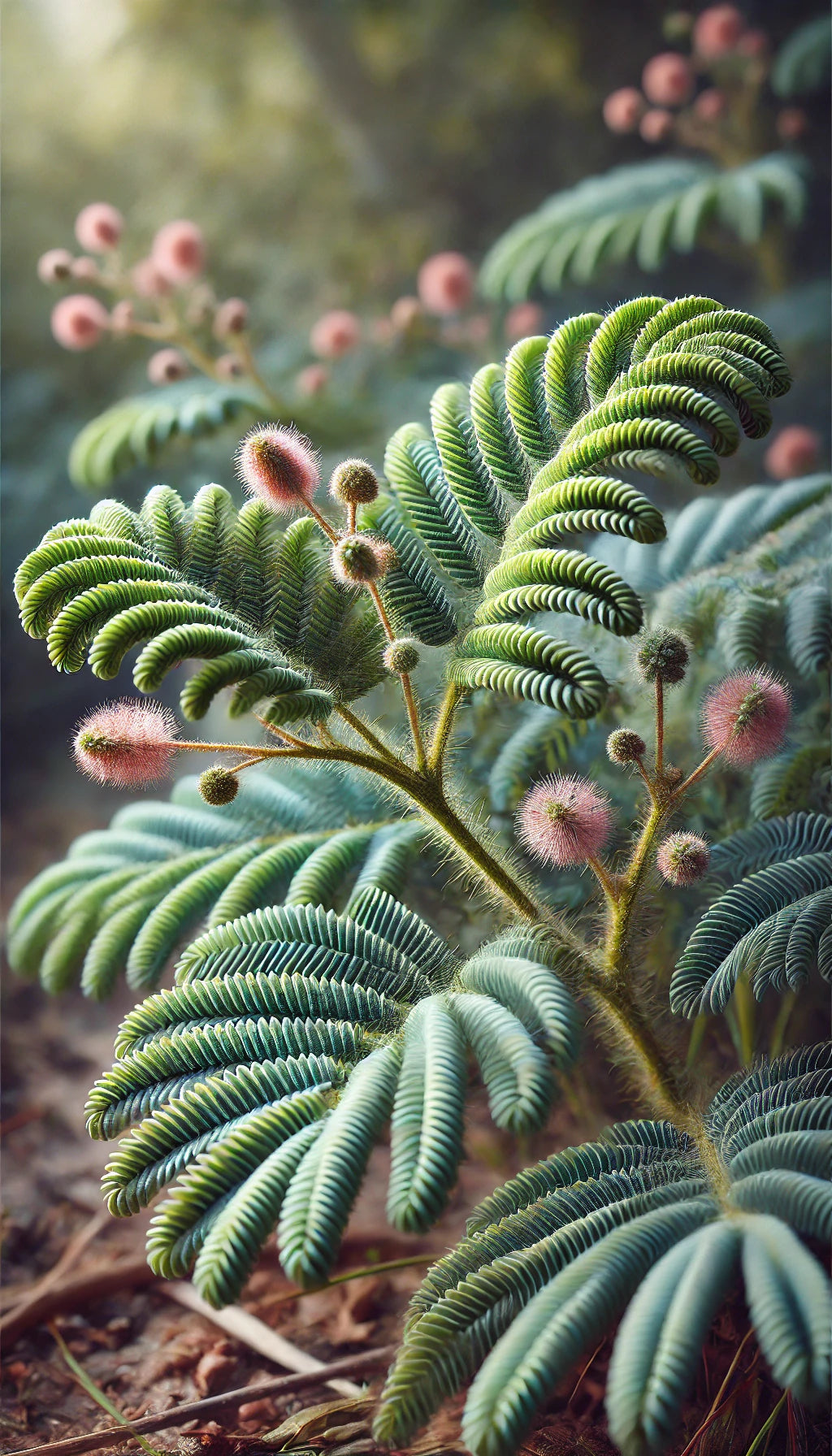
Caring for and keeping Mimosa pudica
Mimosa pudica is pretty easy to care for as long as you follow these basic guidelines:
- Light: It prefers bright, indirect light. Avoid direct sunlight, as it can burn the leaves. A partially shaded spot is ideal.
- Water: Keep the soil slightly moist at all times, but avoid waterlogging or the roots might rot. It loves high humidity, so it's helpful to mist the plant regularly with water.
- Temperature: Mimosa pudica thrives best at 18 to 25 degrees Celsius. Make sure it doesn't get exposed to cold temperatures or drafts.
- Soil: Use well-draining potting soil that can be slightly sandy to ensure good root aeration. This helps prevent waterlogging.
If you follow these tips, your Mimosa pudica will feel right at home and stay healthy for a long time!
Why does the plant show this behavior?
The reaction of Mimosa pudica to fold its leaves when touched is a defense mechanism that helps protect it from potential dangers. Researchers think this movement mainly serves to scare off predators. When the leaves suddenly move, it might confuse animals or make them think the plant is sick or not tasty.
This behavior might also protect the plant from environmental factors like heavy rain or intense sunlight. By closing its leaves, Mimosa pudica reduces the surface area and helps prevent possible damage from outside influences.
Use in healthcare
For people, Mimosa pudica is mainly valued in traditional medicine for its healing properties. Here are some uses:
- Calming agent: In Ayurvedic medicine, Mimosa pudica is used for calming anxiety and sleep problems. The plant is said to have a mild relaxing effects.
- Pain relief and inflammation: Extracts from its leaves and roots are used in folk medicine to ease joint pain and treat inflammation. It's said to have anti-inflammatory and pain-relieving properties.
- Skin health: In some cultures, Mimosa pudica is used for skin issues like wounds and irritations. The plant contains ingredients that are believed to be antibacterial and help heal wounds.
- Gut health: Mimosa pudica is also used as a natural way to cleanse the gut. The seeds are ground into powder and are said to help with parasites and digestive issues.
Despite its promising effects, Mimosa pudica should only be used after talking to professionals, since its effects and safety haven't been fully studied in modern medicine yet.

Mimosa pudica in nature and culture
Mimosa pudica holds a special symbolic meaning in many cultures. Because of its sensitive reaction to touch, it's often associated with modesty or shyness. Its habit of "closing up" at the slightest touch is seen as a metaphor for introverted or sensitive personalities. That's why it often appears in art and literature as a symbol for emotional sensitivity or shyness.
In nature, Mimosa pudica also plays an important role in its ecosystem. Its nitrogen-fixing roots help enrich the soil and improve its quality. This makes it a valuable plant in its natural environment, since it boosts the nutrient cycle and benefits other plants.


