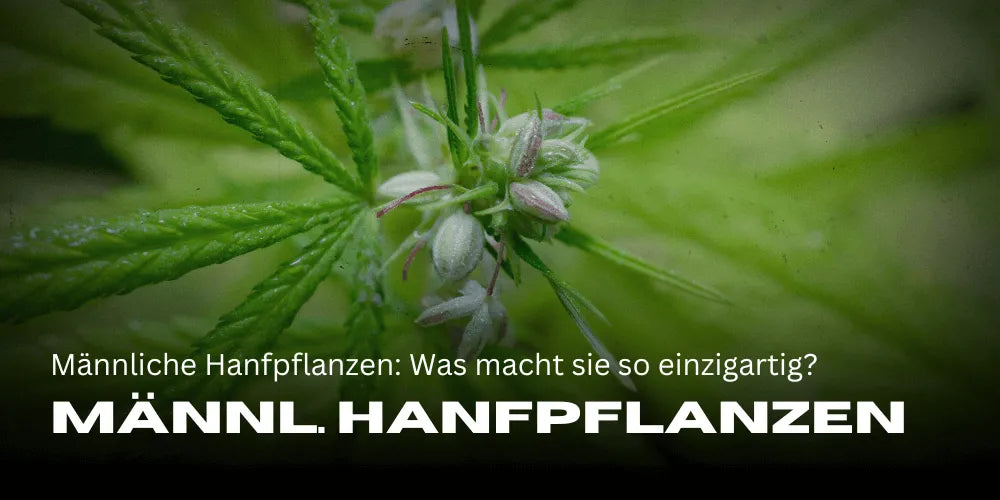
Male hemp plants are often less well known and appreciated than their female counterparts. Nevertheless, they play an important role in the growth cycle and offer interesting aspects for hemp cultivation and utilisation. In this blog post, we will explore the characteristics of male hemp plants, their differences from female plants and their importance to cannabis culture. It is crucial to understand these differences in order to maximise the potential and applications of both plant types.
What is male hemp plant?
Männliche Hanfpflanzen (Cannabis sativa) are one of the two sexes of the hemp plant and play a crucial role in the pollination of female plants. They can be recognised by the fact that they produce pollen, which is used to pollinate the female Flowers. This pollen production is necessary to produce seeds and thus ensure the reproduction of the plants. Male plants begin to flower about two to four weeks earlier than female plants and develop small pollen sacs at the nodes, which eventually burst open and release pollen.
Why this blog post?
This blog post aims to shed light on the often overlooked topic of male hemp plants and emphasise their importance in hemp breeding and production. Many people know little about the role of male plants and their characteristics. By understanding these plants, growers and consumers can make better decisions and realise the full potential of the hemp plant. Especially for people interested in the psychological and therapeutic aspects of cannabis, knowledge about male plants offers new perspectives and applications.
Differences between male and female hemp plants
Male and female hemp plants differ not only in their appearance, but also in their function and benefits. These differences are important for breeding, the production of cannabinoids and the general use of the plants in various industries.
Flower formation and pollination
Female hemp plants produce the sought-after Flowers, which are rich in cannabinoids such as THC and CBD are. These Flowers are often used for medicinal and recreational purposes. The Flowers of female plants are dense and resinous, which makes them particularly valuable for the production of cannabis products. Male plants, on the other hand, do not produce Flowers, but pollen. This pollen is necessary to pollinate the female plants and produce seeds. Without male plants, the reproduction and breeding of new cannabis varieties would not be possible. The pollination process is crucial for genetic diversity and the development of new, stable hemp varieties.
THC content and psychoactive effects
A major difference between male and female cannabis plants lies in their THC content. Female plants contain high concentrations of THC in their Flowers, the psychoactive component that causes the well-known effects of cannabis. These effects range from euphoric mood and relaxation to increased creativity and increased appetite. Male plants, on the other hand, have a significantly lower THC content and are therefore less suitable for consumption when it comes to psychoactive effects. Their main role remains that of pollination and seed production. For this reason, male plants are rarely used for direct consumption, but are mainly valued for their role in reproduction and breeding.
The effects of smoking male hemp plants
Smoking male cannabis plants is less common and is often considered inefficient. However, there are some aspects that should be considered before deciding to consume male plants.
Health risks
Male hemp plants contain fewer cannabinoids such as THC and CBD, which means that they do not offer the same therapeutic or psychoactive effects as female plants. However, smoking male plants can still pose health risks. As with any plant material that is burnt and inhaled, there is a risk of respiratory irritation and lung damage. Inhaling burnt plant material can release harmful chemicals that affect the respiratory tract and lungs.
Psychoactive effects
As male hemp plants only contain small amounts of THC, the psychoactive effects are minimal to non-existent. Anyone hoping to achieve an intoxicating effects by smoking male plants will be disappointed. Instead, you might experience a slight relaxation or no noticeable effects at all. This makes smoking male plants unattractive to those seeking the psychoactive effects of cannabis.
Alternative uses of male hemp plants
Although smoking male hemp plants does not lead to the desired effects, these plants still have valuable alternative uses. Male hemp plants have many applications, particularly in industry and agriculture.
Hemp fibres and their applications
Male hemp plants are known for their robust fibres, which are used in various industrial applications. Hemp fibres are strong, durable and versatile. They are used to make ropes, textiles, paper and building materials. Fibre production from male hemp plants is an important industry that provides sustainable and environmentally friendly materials.

Use of the seeds
The seeds of male hemp plants are also valuable. Hemp seeds are a rich source of protein, essential fatty acids and other nutrients. They can be processed into hemp oil, which is used in cooking, cosmetics and health products. Hemp seeds are also used as a dietary supplement and in animal feed. Their versatile use makes them an important by-product of hemp plant cultivation.
Overall, male hemp plants play an important role in agriculture and industry, even if their direct consumption through smoking makes little sense.